

Free stringing log template for home stringers
A club player about to string their own racquets asked what is worth measuring or logging from day one. Their own starting list was tension, string, date and frequency.
So we collected what stringers say they record, and built a template with those fields. You can download it at the end of this post.
What stringers log for each job
The most common tool is a spreadsheet. The fields that come up most: date, stringing machine, the owner's name, racquet (make, model, string pattern, serial number), mains and crosses (each with string, gauge and tension), payment status, and notes. Notes are where a player's requests go, such as a knot or pre-stretch.
The Tennis Warehouse threads list much the same. A 2004 thread opens with a notebook of "user, date, racquet model and size, string type and gauge, tension of both mains and crosses and the length of string used." In a 2023 thread, a low-volume hobby stringer records the name, the date received and the date strung, the make and model, the reason for the restring, string and tension for the mains and crosses, the cost and whether it was paid, and comments.
Put together, one row covers:
- The stringing job: the date strung and whose racquet it is.
- The racquet: brand, model, string pattern and head size. Some add the serial number. A player can own identical frames, and you could etch a number on each buttcap or put a small sticker on each frame to tell them apart.
- The strings: string, gauge, color and tension, for the mains and the crosses separately.
- The machine it was strung on.
- Money: the price, and whether it was paid.
- Notes: player comments, and anything else.
The template
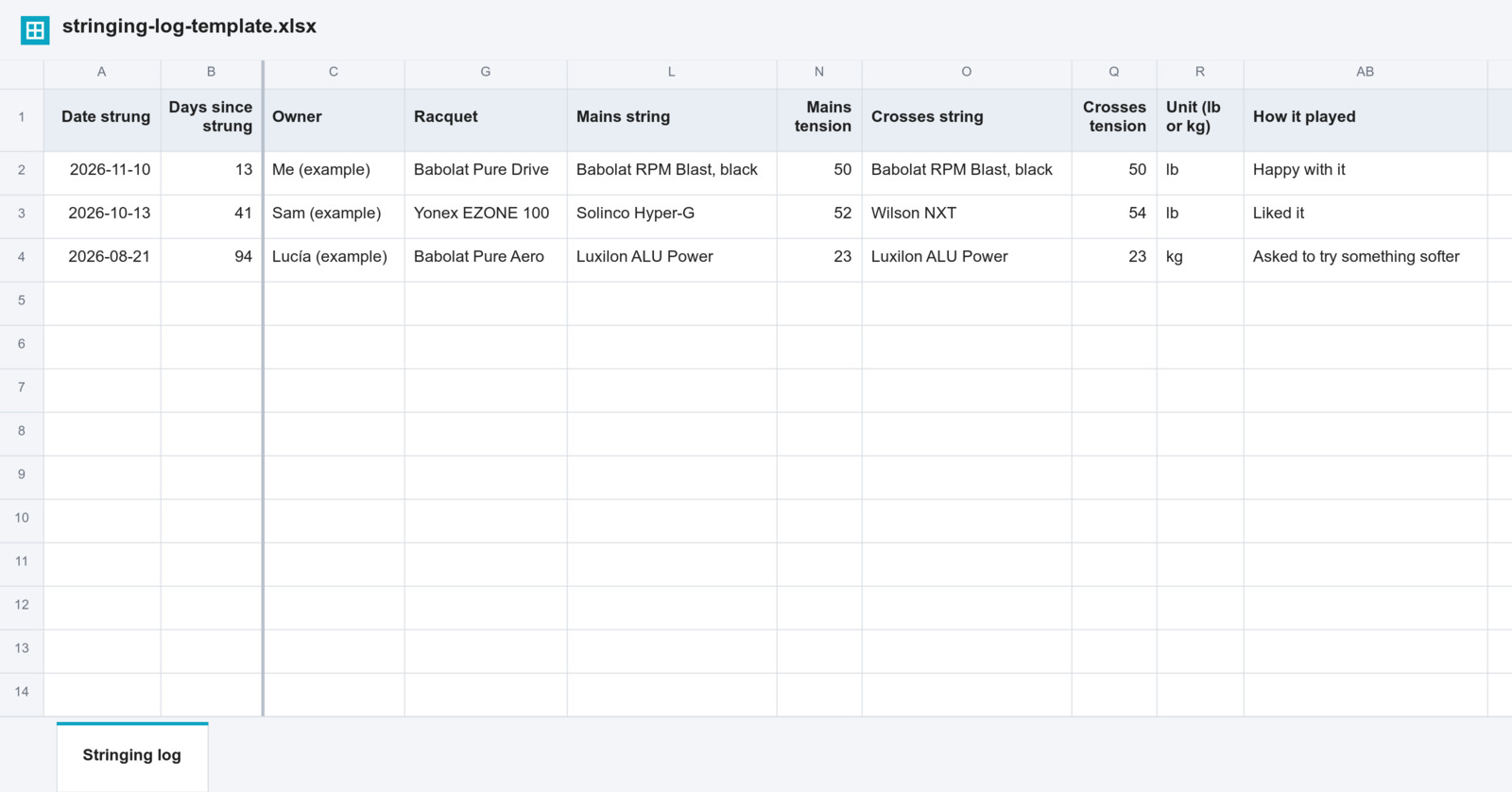
One row per string job, with a column for each field above, plus days since strung, how it played, and optional ones like pre-stretch, knot and DT (dynamic tension).
Days since strung sits next to the date and fills itself in. It counts the days since that job. Each restring gets a new row, so a racquet's newest row tells you how long it has gone since its last restring.
A few details:
- The first three rows are examples.
- Dropdowns: old strings (broken, frayed, lost tension), unit (lb or kg), strings from (stringer or player), and paid (yes or no).
- Put the color in the string column, like "Babolat RPM Blast, black".
- Gauge columns are text, so "16L" and "1.25" stay as typed.
- The header row and the first two columns stay in place when you scroll.
Download the template (.xlsx) for Excel. Use Google Sheets? Open it there with File → Import.
The player's side
The spreadsheet is the stringer's record. The player who gets the racquet restrung has a record to keep too: how the strings play from week to week, and when they go dead. We wrote about why that log is worth keeping.
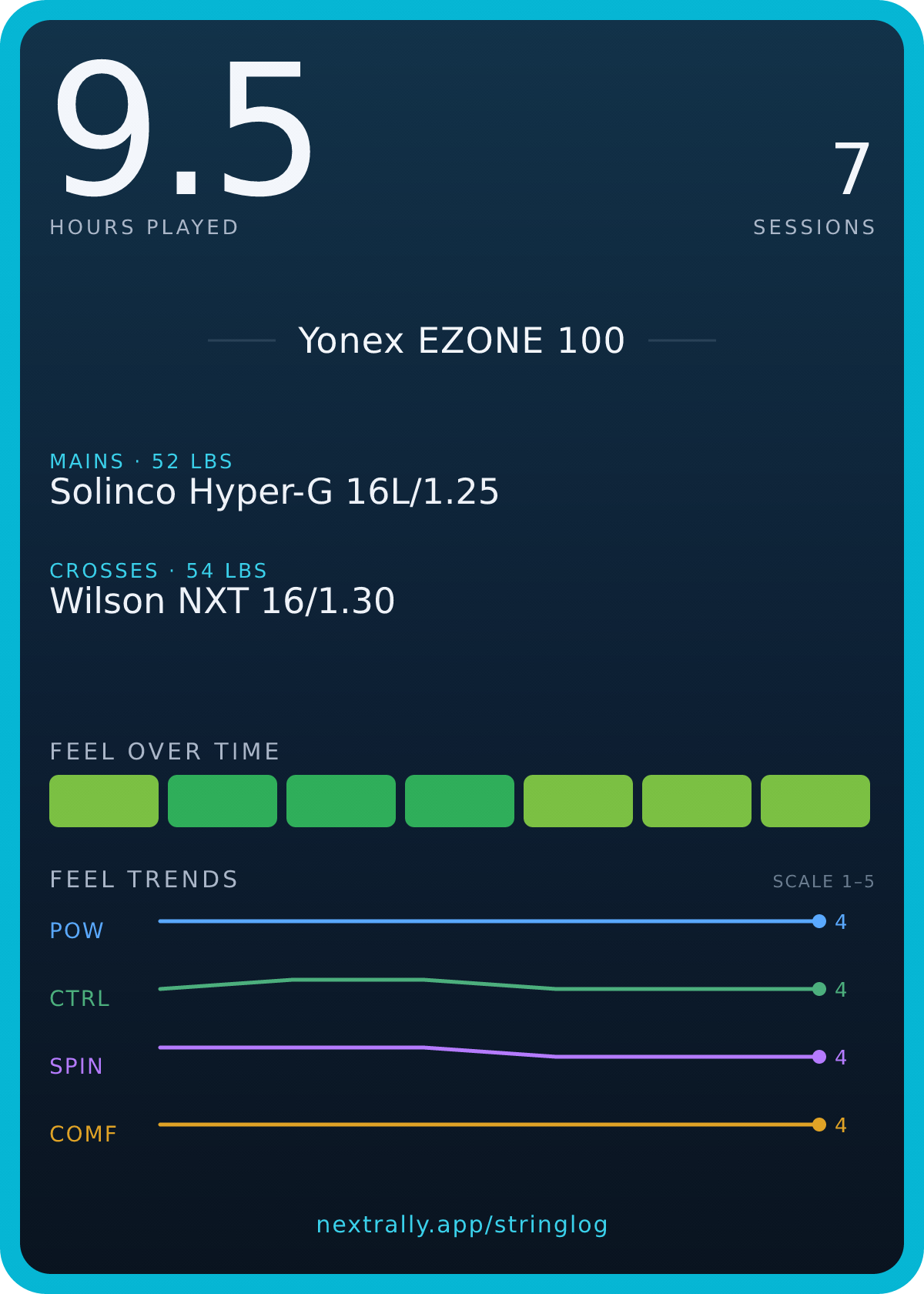
StringLog helps you log the details. Simply pick the racquet from the catalog and the strings from over 550 verified strings. If one is missing, submit it. Stringing for friends or family? Add their names in the Owner field.
After each tennis session, log it in StringLog, rate the feel, take a note, and you'll see how the strings changed over time. Share your setup by clicking the share icon on a string setup card and flex it!
If you don't know where to start, String Finder suggests strings to try.